



March 30, 2025

12 min
Published: March 17, 2025
|
Updated: May 18, 2026
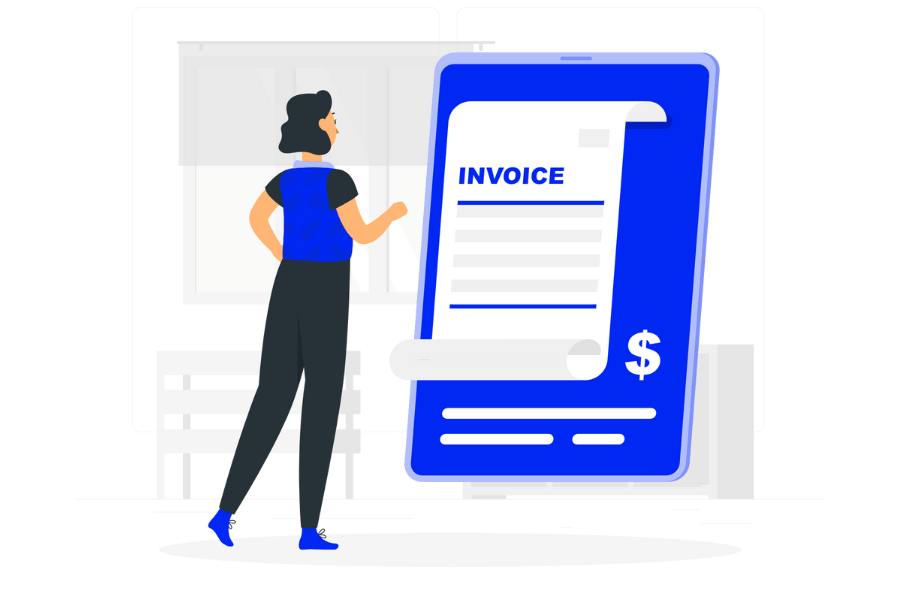
Invoice payment terms are the conditions a seller sets on an invoice that define when and how a buyer must pay — including the payment deadline, accepted payment methods, and any early-payment discount or late-payment penalty.
The most common invoice payment term globally is Net 30 — the buyer pays in full within 30 days of the invoice date. But Net 30 is one of 25 widely used terms, and the right choice depends on cash-flow exposure, client reliability, and industry payment culture. In the UK and EU, statutory late-payment interest applies even when terms are not explicitly written; in the US and Australia, payment-term rules are largely contractual.
Attribute Details Definition Conditions on an invoice specifying when and how the buyer must pay Also called Payment terms · payment conditions · invoice terms · invoice T&Cs Typical location Footer of the invoice, in a fine-print block below the totals Most common term Net 30 (B2B globally); Due on Receipt (B2C retail) Statutory late-payment interest Yes in UK and EU (default rules apply); No federal rule in US or Australia (contractual) Maximum legally enforceable term EU: 60 days B2B (longer only by explicit, fair agreement); UK: no statutory max but 60+ days triggers statutory rights; US/AU: contractual Document where set Invoice itself, with a matching block in the engagement letter or master service agreement
Invoice payment terms are the contractual conditions printed on an invoice that specify the payment deadline, accepted payment methods, and any discounts or penalties tied to payment timing.
Payment terms turn an invoice from a request into an enforceable commercial agreement. They tell the buyer exactly when payment is due (for example, Net 30, or by the 15th of the following month), how the buyer should pay (bank transfer, card, online), and what happens if payment is late (statutory interest, recovery costs, suspension of service). Without explicit terms, the invoice still creates a payment obligation, but the seller loses most of their leverage to enforce timing.
Invoice payment terms are one of the nine fields every compliant invoice must include. For the full breakdown of required fields, see our guide to the essential invoice elements. Payment terms also clarify the often-confused distinction between invoicing vs billing — the term applies to both, but the enforcement mechanics differ for one-off invoices versus recurring billing cycles.
Clear invoice payment terms shorten average days-to-pay, reduce disputes, and trigger statutory protections in jurisdictions like the UK and EU when payments run late.
Four outcomes depend directly on getting payment terms right:
“The mistake we see small-business owners make most often is treating payment terms as a copy-paste decision — they grab ‘Net 30’ because that’s what someone else uses, without considering the cash-flow consequences. Across the businesses we serve, the real question is not which term is most common — it’s which term matches your industry’s payment culture, your client’s reliability, and how much working capital you can absorb. Net 30 in a same-country B2C transaction is fine. Net 30 in construction, where you’ve already paid for materials, can sink you.”
— David Fačko, SEO Specialist at Billdu
The 25 most common invoice payment terms fall into four functional categories: time-based Net terms, trigger-based date terms, advance-payment terms, and structured or staged terms with discounts or milestones.
Each row of the table below contains the term name, its standard short code (used in accounting software and across invoicing platforms), a one-sentence definition, a sample line you can paste into an invoice, the typical use case, and the main risk to watch for. The terms appear in the order most small businesses encounter them — for the underlying numbering convention each line item uses, see our guide on what is an invoice number.
Code Full name What it means Family Due on Receipt Due on Receipt Payment expected immediately on receiving the invoice Net Net 7 Net 7 Payment due 7 calendar days after the invoice date Net Net 10 Net 10 Payment due 10 calendar days after the invoice date Net Net 15 Net 15 Payment due 15 calendar days after the invoice date Net Net 21 Net 21 Payment due 21 calendar days after the invoice date Net Net 30 Net 30 Payment due 30 calendar days after the invoice date — the most common B2B default Net Net 45 Net 45 Payment due 45 calendar days after the invoice date Net Net 60 Net 60 Payment due 60 calendar days after the invoice date — common with large corporate clients Net Net 90 Net 90 Payment due 90 calendar days after the invoice date — typically enterprise or government Net EOM End of Month Payment due by the last calendar day of the month the invoice was issued End-of-month EOFM End of Following Month Payment due by the last day of the month after the invoice was issued End-of-month 15 MFI Month Following Invoice (15th) Payment due by the 15th of the month after invoicing End-of-month 30 MFI Month Following Invoice (30th) Payment due by the 30th of the month after invoicing End-of-month 1/10 Net 30 1% discount, 10 days, Net 30 1% discount if paid within 10 days; full amount due in 30 Discount 2/10 Net 30 2% discount, 10 days, Net 30 2% discount if paid within 10 days; full amount due in 30 Discount 3/15 Net 45 3% discount, 15 days, Net 45 3% discount if paid within 15 days; full amount due in 45 Discount PIA Payment in Advance Buyer pays in full before the seller delivers goods or starts work Advance CIA Cash in Advance Buyer pays in full in cash before delivery or start of work Advance CWO Cash with Order Buyer pays when placing the order, before any work begins Advance 50% Upfront Half upfront, half on completion Buyer pays 50% before work begins; balance on delivery or completion Advance CBS Cash Before Shipment Buyer pays before the seller ships goods Advance CBD Cash Before Delivery Buyer pays before delivery of goods or services takes place Advance COD Cash on Delivery Buyer pays at the moment of delivery; risk sits with the seller until paid Advance LOC Letter of Credit Buyer’s bank guarantees payment to the seller under defined conditions Milestone Stage Payment Stage / Progress Payment Payments scheduled per project milestone — common in construction and long projects Milestone
For long-running engagements where the second half of the work is invoiced on partial payments on invoices, combine “50 % Upfront” with Net 30 on the balance. Most invoicing software handles the two halves on the same invoice number sequence so the audit trail stays clean.
Make invoice easy with a free invoice maker, perfect for contractors and freelancers. Transform your invoicing experience today!
 Free 7-day trialNo credit card requiredCancel anytime
The right invoice payment term for any transaction depends on four dimensions: cash-flow exposure, client reliability, industry payment culture, and transaction size.
Most small businesses default to Net 30 because it is familiar — not because it fits. The framework below produces a sharper answer in roughly two minutes per client.
Cash-flow exposure measures how much of the seller’s own capital is tied up in the work before the invoice is paid.
If you’ve already paid out for materials, contractors, subscriptions, or labour before invoicing, your exposure is high — and a long Net 60 term turns a single late payment into a working-capital crisis. The construction industry is the textbook case: materials are paid for in week 1 of an 8-week build, the invoice goes out in week 8, and Net 60 means the seller funds the project for nearly four months.
Rule of thumb: if your gross margin is below 30 %, every additional 15 days of payment term consumes a meaningful share of that margin in financing cost. Shorten the term, or move part of the payment upfront.
Client reliability is the seller’s assessment of how likely a buyer is to pay on time, based on past behaviour and observable signals.
Four buckets that work in practice:
Industry payment culture is the implicit norm for payment terms within a buyer’s sector, which a seller fights at their own cost.
Pushing Net 30 at a construction general contractor will produce a polite no and a quietly slower process. Pushing Net 60 at a small agency that pays everything weekly will leave them confused. Use industry norms as the default and negotiate only where the deviation is justified:
Industry Default term Notes B2B services (agencies, consulting) Net 15 – Net 30 Net 15 viable for established freelancers; Net 30 standard for agencies Construction Net 60 Often longer in practice; 50 % Upfront + Stage Payments is the survival pattern Fashion / apparel wholesale Net 60 – Net 90 Seasonal cycles; some buyers expect Net 90 Retail B2C Due on Receipt / POD Payment at point of sale; receipts replace invoices SaaS / subscription On charge (recurring) Card-on-file with retry logic; not “Net” at all Manufacturing / wholesale 2/10 Net 30 Early-pay discount is the lever; without it, expect Net 30+
The right default also depends on the kind of document being issued. Subscriptions and retainers run on recurring invoices on a fixed schedule, while project work uses single-issue invoices with a chosen Net term. For the full taxonomy, see our guide to the types of invoices.
Transaction size determines how much structure a payment term needs, with larger transactions requiring milestones and smaller ones tolerating simpler terms.
A €500 invoice and a €50,000 invoice should not carry the same payment term. Use the following rule:
Sample invoice terms and conditions are reusable text blocks that businesses paste into an invoice (or their master service agreement) to make payment expectations legally binding.
Three paste-ready blocks below cover the most common small-business contexts. Each is written in plain English, includes a specific payment term, a defined late-payment consequence, and the accepted payment methods. Adapt the bracketed placeholders to your business.
Pair these with the right invoicing process — for the full walkthrough of creating an invoice that contains these terms, see our guide on how to make an invoice.
Payment terms
Payment is due within 30 days of the invoice date (Net 30). The invoice may be paid by bank transfer or credit card via the Pay Now link included in the invoice email.
Late payment
A late-payment fee of 1.5 % per month (or the maximum permitted by law, whichever is lower) will be applied to any amount outstanding after the due date. In addition, statutory late-payment interest and reasonable recovery costs may be charged where local law permits (UK: Late Payment of Commercial Debts (Interest) Act 1998; EU: Directive 2011/7/EU).
Disputes
Any dispute concerning the invoice must be raised in writing within 14 days of the invoice date. After that period, the invoice is deemed accepted as issued.
Currency and methods
All amounts are quoted in [CURRENCY] and payable in [CURRENCY]. Accepted methods: bank transfer, credit card, [PayPal / Stripe Link / etc.]. Cash and cheque are not accepted.
Payment terms
Payment is due in full at the point of sale (Due on Receipt). Accepted methods: cash, credit card, debit card, [Apple Pay / Google Pay].
Returns and refunds
Goods may be returned within 14 days of purchase with the original receipt, in unused condition. Refunds are issued to the original payment method within 7 working days of receipt of the returned goods. Sale items and personalised goods are non-returnable.
Faulty goods
This policy does not affect your statutory rights under [local consumer-protection legislation — e.g., UK Consumer Rights Act 2015, EU Consumer Sales Directive, US state law].
Payment terms
Payment is due in stages tied to project milestones, as follows:
Stage schedule
• 30 % at contract signing (deposit, non-refundable after work commences)
• 40 % at completion of the first milestone (defined in Schedule A of the contract)
• 20 % at completion of the second milestone
• 10 % on final sign-off and snagging completion
Stage invoicing
Each stage invoice is payable within 14 days of issue by bank transfer.
Late payment
A late-payment fee of 2 % per month (or the maximum permitted by law, whichever is lower) will be applied to any stage invoice outstanding after the due date. Work on subsequent stages may be suspended until the overdue amount is settled in full. Statutory rights apply per Late Payment of Commercial Debts (Interest) Act 1998 (UK) and equivalent EU Member State legislation.
Materials
Materials remain the property of [CONTRACTOR] until paid for in full. Variations to the scope of work must be agreed in writing and invoiced as a separate stage.
Disputes
Any dispute over a stage invoice must be raised in writing within 7 days of receipt. The remaining undisputed balance remains payable on the stated due date.
Whichever sample you adapt, drop it into a professional invoice template that already includes the rest of the required invoice elements — business details, line items, totals, and a unique invoice number. The terms block lives in the footer.
Invoice payment-term rules are set by each country’s commercial-debt legislation and tax authority, with the UK and EU enforcing statutory late-payment interest by default and the US and Australia relying on contractual terms.
Below is a summary of the four markets most relevant to small businesses globally. Always verify the current rules with the primary source before drafting any contract — these provisions change.
The US has no general statutory invoice payment-term rule for private B2B transactions; the federal Prompt Payment Act governs only payments by federal agencies to contractors.
Key points for US small businesses:
Primary sources: 31 U.S.C. § 3901 et seq. (Prompt Payment Act); IRS Publication 583 (Starting a Business and Keeping Records).
UK businesses are entitled to statutory interest and reasonable recovery costs on late B2B payments under the Late Payment of Commercial Debts (Interest) Act 1998 — even when the invoice itself is silent on late-payment terms.
Key points for UK small businesses:
Primary sources: Late Payment of Commercial Debts (Interest) Act 1998; GOV.UK guidance on late commercial payments; HMRC VAT Notice 700/21.
The EU Late Payment Directive 2011/7/EU sets a 60-day cap on B2B payment terms across all 27 Member States, with longer terms permitted only by explicit agreement that is not grossly unfair to the seller.
Key points for EU small businesses:
Primary source: Council Directive 2011/7/EU on combating late payment in commercial transactions.
Australia has no statutory cap on B2B payment terms; the voluntary Late Payment Code (signed by major businesses) commits signatories to pay small-business suppliers within 30 days.
Key points for Australian small businesses:
Primary sources: ATO — Tax invoices (GSTR 2013/1); business.gov.au — How to invoice; Australian Small Business and Family Enterprise Ombudsman — Late Payment Code.
Freelance invoice payment terms work best when set to Net 14 or Net 30 with a clear late-payment penalty, written into the engagement letter before any work starts, and enforced with automated reminders from day one.
Three practical patterns that compound across a freelance career:
If the first time a client sees your payment term is on the invoice, you are negotiating after the work is done. State the term in the proposal, repeat it in the engagement letter, then put it on the invoice. By the time the invoice arrives there should be no surprise.
“End of the month” invoicing creates an artificial cash-flow trough. A piece of work finished on the 3rd of the month is then waiting 27 + 30 = 57 days for payment instead of 30. Invoice the day the work is delivered.
Day 0 (invoice issued), day 7 (gentle reminder), day 14 (firm reminder), day 30 (overdue notice with late-fee calculation), day 45 (final notice). All five should be templated. For the detailed step-by-step of professional invoice sending, including reminder cadence, see our guide on how to send an invoice.
Late-paying clients are also the clients who benefit most from online payments — a Pay Now button next to the total removes the “I’ll get to it” excuse.
The six most common payment-term mistakes are setting no term at all, using ambiguous wording, omitting the late-payment penalty, switching terms mid-engagement, failing to enforce them, and choosing terms that don’t match cash-flow reality.
Each one accounts for a meaningful share of small-business cash-flow pain. All six are easy to avoid if flagged upfront.
When a term IS breached, the right next step depends on the size and the relationship. For the standard collection sequence, see our guide on dealing with an unpaid invoice.
And that covers the basics of everything you need to know about Invoice Payment Terms & Conditions. If you’re a business owner and you want to learn a new way to track and generate custom invoices for your clients, try Billdu’s software with a free trial.
You can easily add your logo, input your payment terms, add discounts, offer different payment options, and track dozens of invoices from one centralized dashboard. Choose from a host of templates to help you create your invoices, send them out and get money flowing back into your business.
Freelancer and contractor invoice templates from Billdu include various invoice payment terms to fit your specific needs. Simplify your billing process with our comprehensive templates.
Free 7-day trialNo credit card requiredCancel anytime




Sign up now for a 30-day free trial and get 20% off on your first subscription
By signing up you agree to Terms of use and Privacy policy