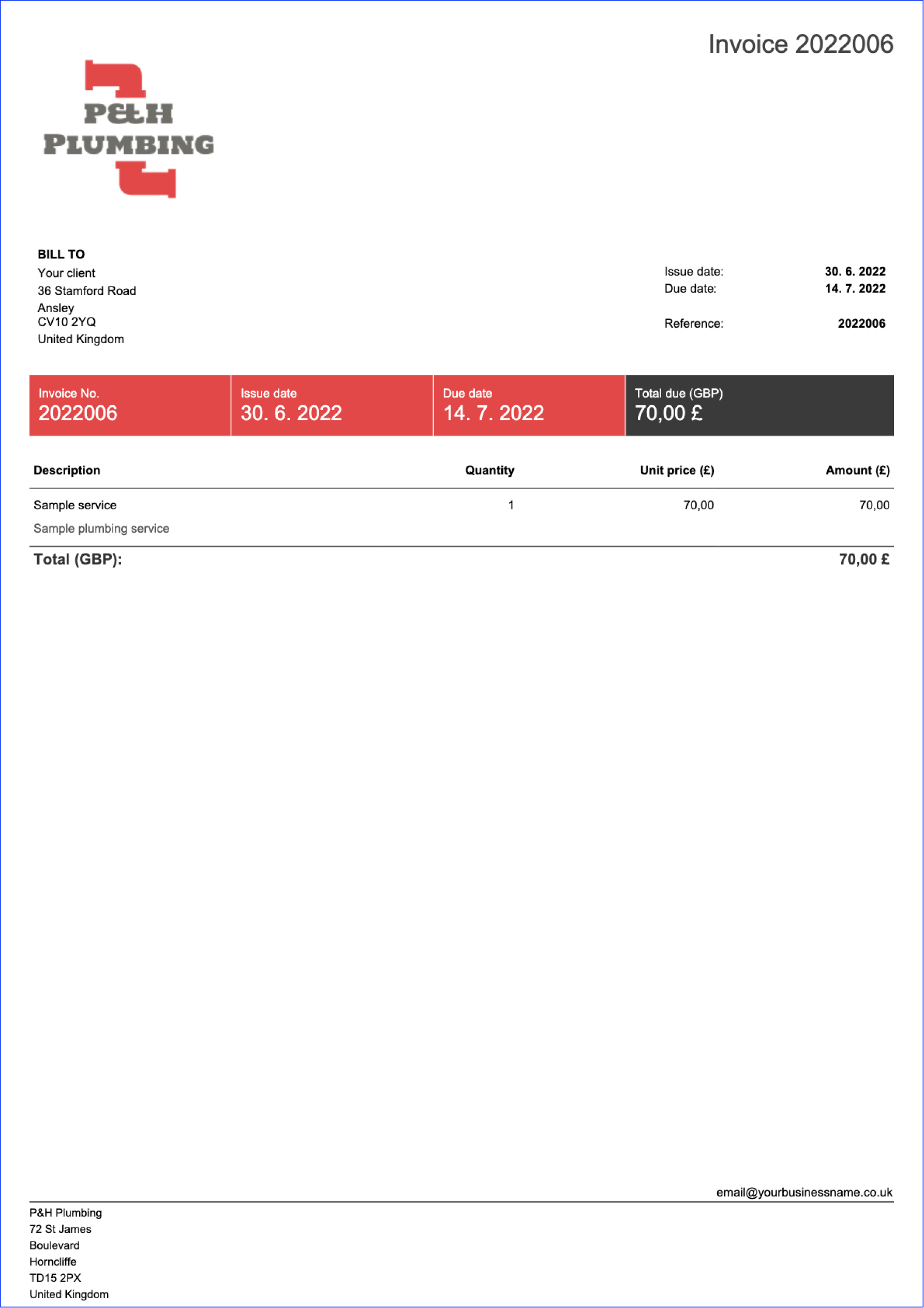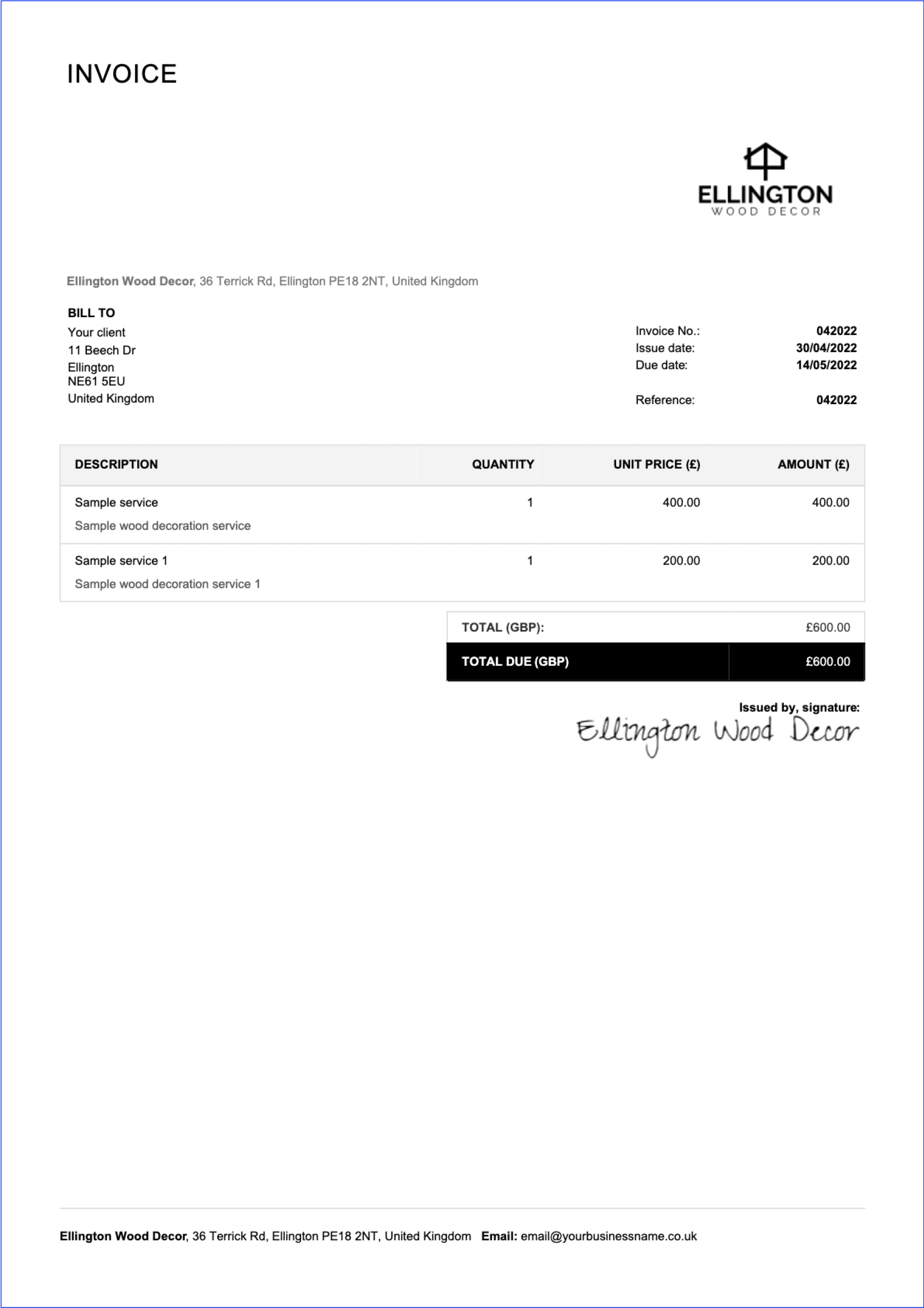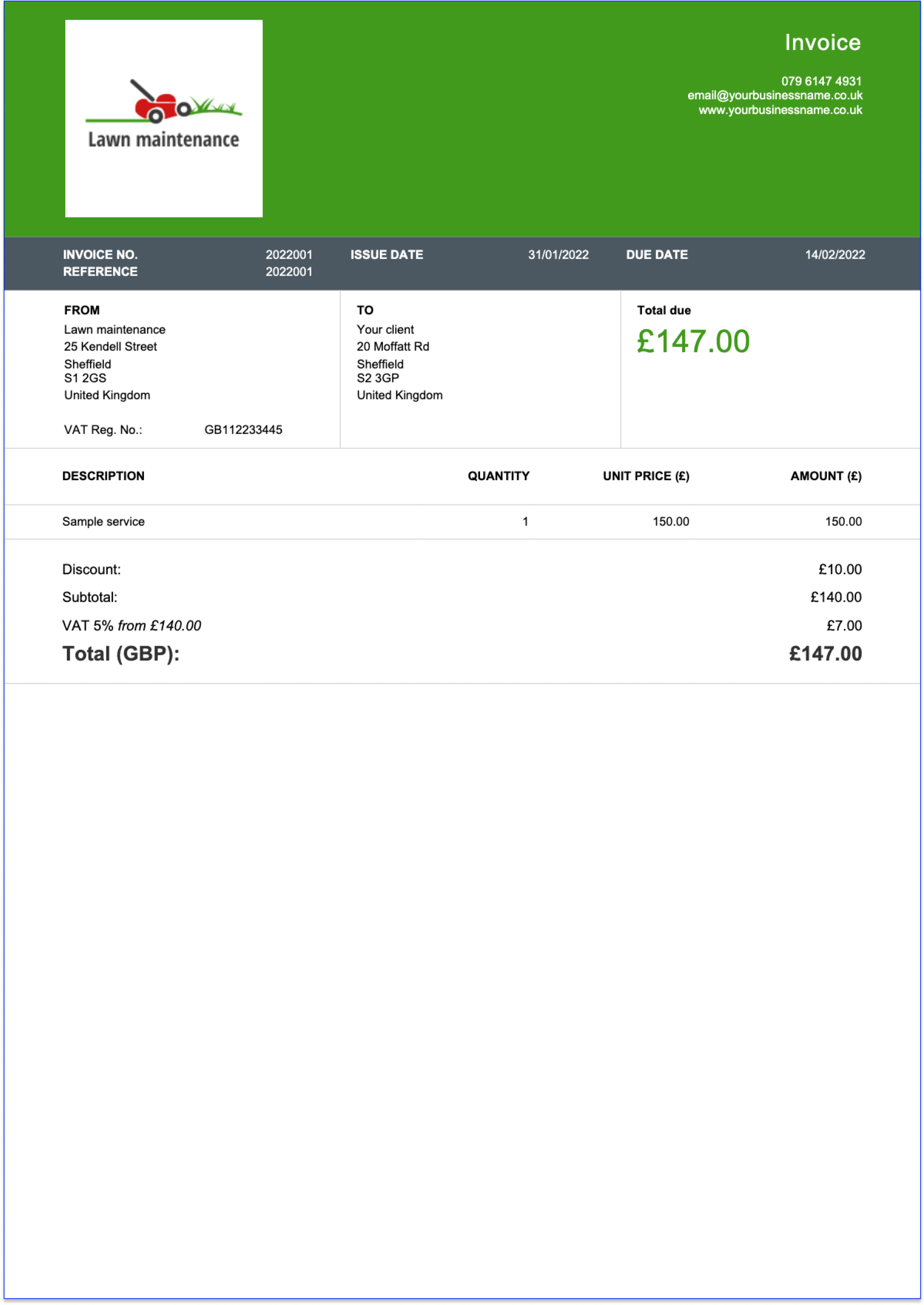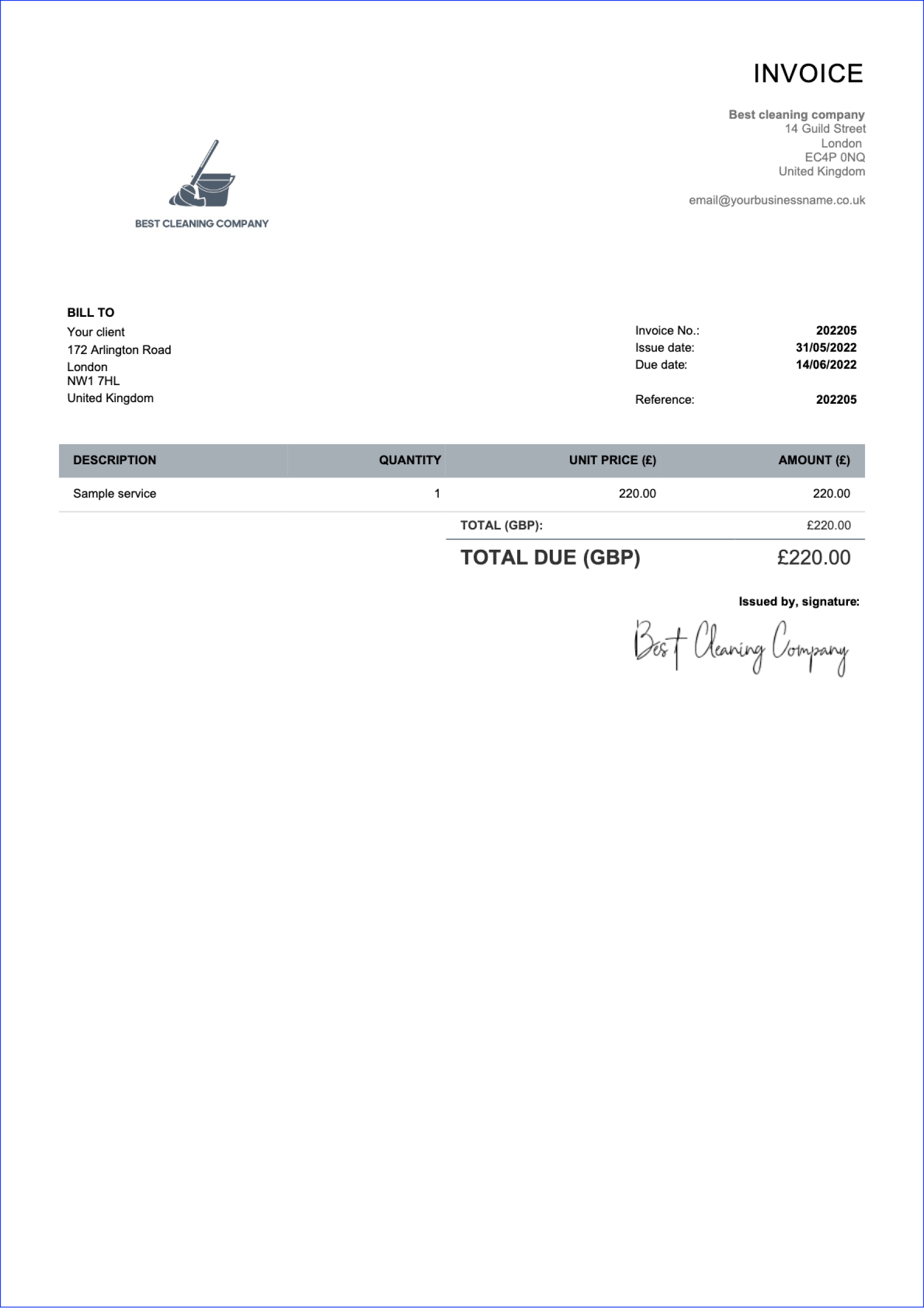

Invoice Template UK
Use our free UK invoice template to create invoices or VAT invoices for your UK business.
Use our free UK invoice template to create invoices or VAT invoices for your UK business.
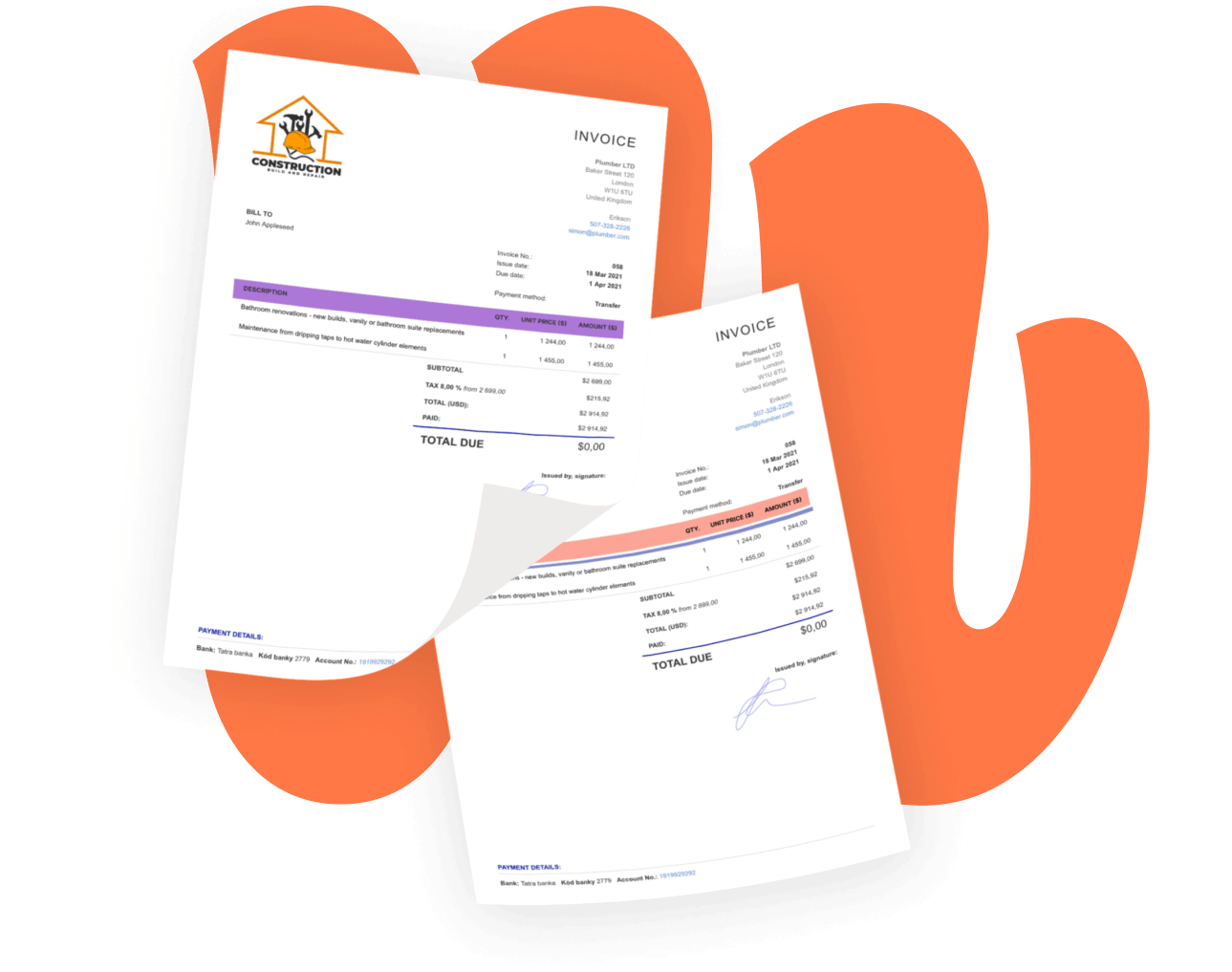
Looking for a free UK invoice template or a VAT invoice for your business? Browse our simple, downloadable invoice forms below and customise yours now.
The UK has three VAT rates: the standard rate of 20%, a reduced rate of 5% (on things like home energy and children’s car seats), and a zero rate of 0% (on items such as most food and children’s clothing). Only VAT-registered businesses charge VAT, and the invoices they issue are then called VAT invoices.
A VAT invoice has more requirements than a standard invoice. To be valid for HMRC it must give enough detail for the customer to understand what was supplied and how the VAT was worked out. A UK VAT invoice usually includes: your VAT number, a unique invoice number, the invoice date, the time of supply (tax point) if different, your name and address, the customer’s name and address, a description of the goods and services supplied, the quantity, the net amount, the VAT rate, the VAT amount, and the total payable. If you use more than one VAT rate, show a breakdown for each. Keeping this consistent makes your VAT Return easier and reduces questions from HMRC.
A regular invoice is simply a request for payment — it’s used when you’re not VAT registered, when a supply is exempt, or when VAT isn’t chargeable. A VAT invoice is different because it’s the document your customer may use to reclaim VAT (where allowed) and it supports your own VAT Return. The main practical difference is that a VAT invoice needs clear VAT calculations and a stronger record trail — link each invoice to the supply, any credit notes, and the payment received, so you can evidence your totals if HMRC asks, even years later.
You aren’t registered for VAT by default. You must register once your VAT-taxable turnover goes over £90,000 in any rolling 12-month period — the registration threshold that has applied since 1 April 2024 — or if you expect to go over it in the next 30 days alone. You can also register voluntarily below the threshold, which is useful if you want to reclaim VAT on your purchases or your customers expect a VAT-registered supplier. The deregistration threshold is £88,000. Once registered, you’ll get a VAT number to add to every invoice, along with a VAT registration certificate confirming your number, your effective date of registration, and when your first return is due.
VAT-registered businesses send a VAT Return to HMRC, usually every 3 months (your “accounting period”). The return reports your total sales and purchases, the VAT you owe, the VAT you can reclaim, and any refund due. You’ll also submit a final return if you cancel your registration. You can pull the figures you need straight from your Billdu dashboard.
Making Tax Digital (MTD) requires you to keep digital records and file online using compatible software. MTD for VAT already applies to all VAT-registered businesses. From April 2026, MTD for Income Tax also begins for self-employed people and landlords with qualifying income over £50,000 (extending to £30,000 from April 2027 and £20,000 from April 2028). Keeping your invoices and totals in a consistent digital format makes both VAT and income-tax reporting much easier.
If a business customer pays late, the Late Payment of Commercial Debts (Interest) Act 1998 lets you charge statutory interest of 8% plus the Bank of England base rate on overdue business-to-business invoices — even if your contract doesn’t mention it. You can also claim fixed compensation per invoice: £40 for debts up to £999.99, £70 for £1,000 to £9,999.99, and £100 for £10,000 or more, plus reasonable recovery costs above that sum. If no payment date was agreed, payment is due 30 days after the invoice. Show any interest clearly on a follow-up invoice or statement.
Have you not found your desired template? We have more free templates in our Free Generator
Professional templates aren’t the only thing we offer — with Billdu you can grow your business even further.

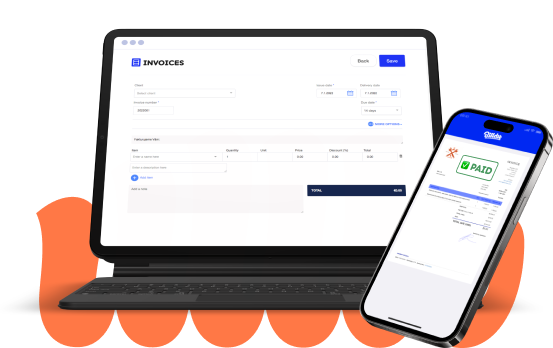
Create your invoice templates directly in our app and keep your documents at one place and access them whenever you like. You can try it out with 7-days free trial.

Add a Pay Now button to the bill template and get paid up to 9 days sooner by accepting payments from online payment services. Nothing cheers up more than a settled bill!

Don't limit yourself with invoices only. Create estimates, quotes, delivery notes and more. Keep the track with our dashboard that gives you the greatest comfort for operating and monitoring your business.
You must register once your VAT-taxable turnover goes over £90,000 in any rolling 12-month period, or if you expect to exceed it in the next 30 days. Below that, you can register voluntarily. The threshold has been £90,000 since April 2024.
Your VAT number, a unique invoice number, the date, your and your customer’s name and address, a description of the goods and services, the quantity, the net amount, the VAT rate and amount, and the total payable — with a breakdown per rate if you use more than one. You can build one with our free invoice generator.
No - you must not charge VAT unless you’re VAT registered, and a non-VAT invoice shouldn’t be labelled as a VAT invoice. This is common for many sole traders and self-employed businesses below the threshold.
Yes. For business-to-business invoices you can charge statutory interest of 8% plus the Bank of England base rate, plus fixed compensation of £40, £70, or £100 depending on the debt size — even if your contract is silent on interest.
MTD means keeping digital records and filing online with compatible software. It already applies to all VAT-registered businesses, and from April 2026 it begins for self-employed people and landlords earning over £50,000.

Simple Invoicing Platform for Freelancers and Small Businesses

Sign up now for a 30-day free trial and get 20% off on your first subscription
By signing up you agree to Terms of use and Privacy policy